The FBDD Literature blog is getting a bit of a makeover. One of the reasons for doing this is that since I escaped from Big Pharma my access to literature has been erratic, making it difficult to maintain the required awareness of the current literature. However, a bigger reason for the changes was to broaden the focus of the blog to include Molecular Design, which is my primary scientific interest.
There is of course a lot of molecular design in FBDD, which I like to think of as little more than a smart way to do structure-based design. Molecular design may be defined as control of properties of compounds and materials through manipulation of molecular properties. Although computational chemistry tools are very useful in molecular design, the essence of design is thinking about molecules and I don’t want people without a CompChem background to be put off by the blog having Molecular Design in its title.
There will still be plenty of fragment-based material in the blog since I will be continuing the series on screening library design which came to a halt on Easter Island a year and half ago. However, I’m also planning some posts on physicochemical properties such as logP and logD which are important in FBDD but have a much broader relevance in Drug Discovery.
Saturday, 25 June 2011

Sunday, 10 April 2011
A short rant about journal editors
In the previous post I had an indirect dig at journal editors. In this post the dig will be a lot more direct. Recently I accepted an ‘invitation’ to review a manuscript for a journal that, out of tact, I will not name. It always amuses me that these requests for what is effectively free consultancy are presented as ‘invitations’ as if the journal is doing me a huge favour. Nevertheless I do go through with the charade on occasion (although never to the extent of unctuously thanking the editor for his or her magnanimity) since I do regard reviewing manuscripts as the duty of anyone who publishes in journals. The review was duly completed and, given that I was recommending that the manuscript be put out of its misery as quickly and humanely as possible, I’d been thorough, devoting four or five hours to the assignment.
I’d typed the review as word document, planning to paste it into the relevant form in the editorial system. When I logged in the assignment was no longer there so I emailed the Editor and Support assuming that there was a problem with the system. I got a reply from Support explaining what had happened. The Editor had already made the decision and therefore didn’t need my input any more so the assignment had been deleted. Support noted that this was unfortunate and hoped that they could utilize my services again as a reviewer and I’m still waiting for the Editor’s apology. Not wanting to deprive them of feedback, I suggested that they were being overly optimistic if they thought that I would even consider reviewing another manuscript for them. And that’s where things stand. Humph!
So that was the teaser. What I really wanted to talk about was an editorial entitled ‘Science Blogs and Caveat Emptor’ that appeared in another journal late last year. ChemBark was onto it in a flash and soon it had been Pipelined as well. More recently the editorial was reviewed by Michelle Francl (blogs: 1 | 2 ) in her Nature Chemistry column and to be honest there’s not a lot that I can add to what these commentators have already said. Reading the editorial I couldn’t help thinking that it looked like it could have been pulled right out of a blog and Michelle is right on target when she says, “... I had to admire Murray for his ability to raise so many key questions about science writing in a concise and provocative 619 words. He has real potential as a ‘blogger’”. Except that most blogs allow you to post comments.
Provided that their journals score highly enough, Impact Factor becomes a Maginot Line behind which editors can hide and I was not surprised to see it paraded in the first paragraph of the editorial. One statement that I couldn’t quite get my head round was, “By extension, editors and reviewers reinforce the meaningfulness of Impact Factors by explicit attention to the reliability of submitted articles; if the Scientific Method has not been adequately followed, then there should be a downwardly adjusted evaluation of impact”. I’d always thought that impact factor was determined by numbers of citations and a citation made the same contribution regardless whether an author was heaping praises his previous study or drawing the attention of readers to an odor of something other than roses emanating from a rival's article.
One of the more bizarre assertions made in the editorial is, “Bloggers are entrepreneurs who sell “news” (more properly, opinion) to mass media: internet, radio, TV, and to some extent print news”. Having never received payment for any of my bloggings, I do find this statement a little rich coming as it does from somebody whose journal invites me to purchase content ($35 for 48 hours of access) when I try to look at it. Furthermore, some journals are actually devoted to publishing Opinions and these journals certainly don’t let you see their content for free.
I think what the author of the editorial really doesn’t like about scientific bloggers is their ability to do post-publication review of the journal’s articles in a very public manner. The illusion of the infallibility of Peer Review is often the first casualty when bloggers (and their commentators) discuss specific scientific articles. But can you blame the Editors when all they can see is that the Heretics have taken over the Auto-da-Fé.
Literature cited
R Murray, Science Blogs and Caveat Emptor. Anal. Chem., 2010, 82, 8755 DOI
M Francl, Blogging on the sidelines. Nat. Chem. 2011, 3, 183-184 DOI
Monday, 14 February 2011
FBLD versus DOS
The relative merits of Fragment Based Ligand Design (FBLD) and Diversity-Oriented Synthesis (DOS) were recently debated in a Nature Forum. This debate has already been reviewed both in Practical Fragments and In The Pipeline.
I believe by setting up the debate like this, the editorial staff of the journal show a poor understanding of Lead Discovery (LD). In essence a comparison is being made between apples and oranges. FBLD (also known as FBLG with the LG for lead generation) is an integrated LD framework and a comparison with conventional high throughput screening (HTS) and associated Hit-to-Lead (H2L) chemistry would have made more sense. DOS is essentially an approach to extending the chemical space covered by screening collections and filling ‘holes’ in the existing chemical space. A DOS approach could be easily used to enhance existing fragment libraries (especially if using molecular shape to quantify similarity) while the output of a fragment screen could be used as input to design of DOS libraries. The ‘Core and Layer’ approach that I’ve used in design of generic fragment libraries (and even one library for cell screening) can accurately be described as diversity-oriented.
The case for FBLD is made by Philip Hajduk who makes the important points that a relatively small number of fragments can be used to cover a relatively large chemical space and that synthetic resource is always directed towards the target of interest. I like to say that leads from FBLD are assembled from proven molecular recognition elements and would add that fragments allow you to search chemical space with a better-controlled resolution than do more elaborated molecules. I don’t happen to agree with his assertion that “there is ample evidence that larger molecules are more likely than smaller ones to succeed as drugs in clinical trials” but this does not weaken the first two points that he makes. It's worth remembering that you usually need protein crystal structures in FBLD both for the target (at the outset of screening) and for complexes with weakly-bound fragments. If you don't obtain these quickly you're going to be working on Project Passchendaele.
DOS is championed by Warren Galloway and David Spring. They note that there are situations in which FBLD is not currently applicable, for example in phenotypic screens (see Derek Lowe's comments In The Pipeline) or for probing certain protein-protein interactions. I agree with this point and believe that we’ll always need a variety of assays for successful LD, especially as Drug Discovery is expected to get even more challenging in the future. If you’re trying to enhance the ability of screening libraries to hit targets then it makes sense to use molecular diversity criteria to extend coverage in a more systematic manner. I don’t see why the term DOS should only apply when molecular size exceeds an arbitrary cut off and believe the real issue is more about how than whether DOS should be used to enhance screening libraries.
The advocates of DOS need to take a close look at how they define diversity. If the conserved core of a DOS library cannot be accommodated in a binding site then, barring nuclear fusion, none of the compounds in the library will fit either. From the point of view of this target the library has no diversity regardless of the number of compounds in it.
I was disappointed that molecular complexity (check this link for an alternative view) was not raised by either party in this debate since it’s a unifying concept that brings together different strategies for compound library design. Very complex molecules leave the H2L chemists with little or no room to manoeuvre. This is less of a problem if the screening hit nails the target with nanomolar potency and has jaw-dropping bioavailability. However, reality is more likely to be micromolar with one or more ADMET issues needing to be addressed. Advocates of DOS really do need to start thinking a bit more about molecular complexity in the context of screening compounds for biological activity. I always encourage folk designing a DOS library to make a relatively large sample of the library prototype so that it can be included in the fragment screening collection.
So what’s the verdict? I believe that FBLG is here to stay although it is not yet clear how widely applicable the approach is. I also believe that some form of DOS can be used to enhance any screening collection provided that:
(1) Diversity is seen in the context of the existing collection
(2) The importance of hit exploitability is recognised
I’d be interested to hear what other people think about this topic so feel free to comment. I’ll also set this up as a discussion for the FBDD LinkedIn group since commenting there is a bit easier. Also don’t forget that the journal allows you to comment on the article directly.
Literature cited
Hajduk, Galloway & Spring, A question of library design (Forum Drug Discovery). Nature 2011, 470, 42-43 | DOI
Nicholls et al, Molecular Shape and Medicinal Chemistry: A Perspective. J. Med Chem. 2010, 53, 3862-3886 | DOI
Hann, Leach & Harper, Molecular Complexity and Its Impact on the Probability of Finding Leads for Drug Discovery. J. Chem. Inf. Comput. Sci., 2001, 41, 856–864 | DOI
I believe by setting up the debate like this, the editorial staff of the journal show a poor understanding of Lead Discovery (LD). In essence a comparison is being made between apples and oranges. FBLD (also known as FBLG with the LG for lead generation) is an integrated LD framework and a comparison with conventional high throughput screening (HTS) and associated Hit-to-Lead (H2L) chemistry would have made more sense. DOS is essentially an approach to extending the chemical space covered by screening collections and filling ‘holes’ in the existing chemical space. A DOS approach could be easily used to enhance existing fragment libraries (especially if using molecular shape to quantify similarity) while the output of a fragment screen could be used as input to design of DOS libraries. The ‘Core and Layer’ approach that I’ve used in design of generic fragment libraries (and even one library for cell screening) can accurately be described as diversity-oriented.
The case for FBLD is made by Philip Hajduk who makes the important points that a relatively small number of fragments can be used to cover a relatively large chemical space and that synthetic resource is always directed towards the target of interest. I like to say that leads from FBLD are assembled from proven molecular recognition elements and would add that fragments allow you to search chemical space with a better-controlled resolution than do more elaborated molecules. I don’t happen to agree with his assertion that “there is ample evidence that larger molecules are more likely than smaller ones to succeed as drugs in clinical trials” but this does not weaken the first two points that he makes. It's worth remembering that you usually need protein crystal structures in FBLD both for the target (at the outset of screening) and for complexes with weakly-bound fragments. If you don't obtain these quickly you're going to be working on Project Passchendaele.
DOS is championed by Warren Galloway and David Spring. They note that there are situations in which FBLD is not currently applicable, for example in phenotypic screens (see Derek Lowe's comments In The Pipeline) or for probing certain protein-protein interactions. I agree with this point and believe that we’ll always need a variety of assays for successful LD, especially as Drug Discovery is expected to get even more challenging in the future. If you’re trying to enhance the ability of screening libraries to hit targets then it makes sense to use molecular diversity criteria to extend coverage in a more systematic manner. I don’t see why the term DOS should only apply when molecular size exceeds an arbitrary cut off and believe the real issue is more about how than whether DOS should be used to enhance screening libraries.
The advocates of DOS need to take a close look at how they define diversity. If the conserved core of a DOS library cannot be accommodated in a binding site then, barring nuclear fusion, none of the compounds in the library will fit either. From the point of view of this target the library has no diversity regardless of the number of compounds in it.
I was disappointed that molecular complexity (check this link for an alternative view) was not raised by either party in this debate since it’s a unifying concept that brings together different strategies for compound library design. Very complex molecules leave the H2L chemists with little or no room to manoeuvre. This is less of a problem if the screening hit nails the target with nanomolar potency and has jaw-dropping bioavailability. However, reality is more likely to be micromolar with one or more ADMET issues needing to be addressed. Advocates of DOS really do need to start thinking a bit more about molecular complexity in the context of screening compounds for biological activity. I always encourage folk designing a DOS library to make a relatively large sample of the library prototype so that it can be included in the fragment screening collection.
So what’s the verdict? I believe that FBLG is here to stay although it is not yet clear how widely applicable the approach is. I also believe that some form of DOS can be used to enhance any screening collection provided that:
(1) Diversity is seen in the context of the existing collection
(2) The importance of hit exploitability is recognised
I’d be interested to hear what other people think about this topic so feel free to comment. I’ll also set this up as a discussion for the FBDD LinkedIn group since commenting there is a bit easier. Also don’t forget that the journal allows you to comment on the article directly.
Literature cited
Hajduk, Galloway & Spring, A question of library design (Forum Drug Discovery). Nature 2011, 470, 42-43 | DOI
Nicholls et al, Molecular Shape and Medicinal Chemistry: A Perspective. J. Med Chem. 2010, 53, 3862-3886 | DOI
Hann, Leach & Harper, Molecular Complexity and Its Impact on the Probability of Finding Leads for Drug Discovery. J. Chem. Inf. Comput. Sci., 2001, 41, 856–864 | DOI
Tuesday, 11 January 2011
Rule of Three considered harmful?
I should start this post by saying that I’ve never actually used the Rule of Three for fragment selection. Part of the reason for this is simply a matter of timing since I’d been designing fragment libraries before the Rule of Three came along. However, I believe that there are reasons that you need to take a very close look at the Rule of Three if you’re planning to build a fragment library strategy around it. The rule was introduced in late 2003:
“We carried out an analysis of a diverse set of fragment hits that were identified against a range of targets. The study indicated that such hits seem to obey, on average, a ‘Rule of Three’, in which molecular weight is < 300, the number of hydrogen bond donors is ≤3, the number of hydrogen bond acceptors is ≤3 and ClogP is ≤3. In addition, the results suggested NROT (≤3) and PSA (≤60) might also be useful criteria for fragment selection. These data imply that a ‘Rule of Three’ could be useful when constructing fragment libraries for efficient lead discovery.”
My first criticism of the Rule of Three is that the authors do not say how they define hydrogen bond acceptors. I’ll illustrate this point with reference to the phenylhydantoin below which along with the accompanying properties was retrieved from eMolecules. As far as I’m concerned, this compound would have been perfectly acceptable for inclusion in a fragment library before the Rule of Three was published and the publication of the rule would not make change my mind. If, however, you asked me whether the compound complied with the Rule of Three, I’d have to admit that I simply don’t know. The number of hydrogen bond donors is not an issue because there is only one of these in the molecule. The number of acceptors is more problematic. I would only count the oxygen atoms in this molecule as acceptors and, since there are two of these, the molecule would be compliant with the Rule of Three. However the well-known Rule of Five treats all nitrogen and oxygen atoms as acceptors so if you use those criteria you’ll count a total of four acceptors and conclude that the compound is not compliant with the Rule of Three. This is not a problem for me because I don't use the Rule of Three but spare a thought for the person assembling a commercial fragment library.

My second criticism of the Rule of Three concerns how it was actually derived. The authors describe performing “an analysis of a diverse set of fragment hits” without actually saying anything about what this analysis entailed. If they were analysing hits from their own fragment screens then the characteristics of the hits will reflect the criteria by which compounds were selected for fragment screening. If they were sampling from a more extensive database of screening hits, I’d still want to know how the fragment hits were distinguished from the other hits.
My third criticism is as much about how cut offs get used as it is of the Rule of Three. There’s a diagram of a funnel that you often see in virtual screening reviews. We also use funnels (or filters as we prefer to call them) in screening library design and in fact this activity is not a whole lot different from working up a virtual screen. Typically we apply filters and sample (e.g. using molecular diversity criteria) from what makes it through. Note that I say ‘filters’ rather than ‘a filter’. The Core and Layer (CaL) approach to library design has been described both in this blog and in a journal article. In CaL the filters used prioritise compounds get less restrictive as more compounds are added to the library. The reason for doing this is that it gives better control of chemical space coverage since it forces the selection of the smallest and least complex molecules first. A molecular diversity maximiser such as BigPicker, will tend to pick larger, more complex molecules because these tend to be more dissimilar to each other.
I am also prepared to accept compounds that have measured/calculated logP values in excess of 3 provided that the appropriate precautions (select ionisable compounds and/or use measured solubility values) have been taken to minimise the risk of poor solubility. You don’t want a whole library of compounds with logP values in excess of 4 but having some will increase the range of targets that you can nail. I am more concerned about the distribution of logP and molecular size in a library than I am with their maximum values and believe using multiple cut offs allows better control of these distributions.
You'll find plenty of material on the internet that deals with the Rule of Three although inconsistencies can be observed. It is not clear whether or not the Rule of Three includes the restrictions on NROT and PSA. As I read it in the original article, I don't think it does but I'm not sure and think it could have been made clearer. This webpage (accessed 11-Jan-2011) appears to suggest that Maybridge FBDD team think that the NROT and PSA criteria are included in the Rule of Three. However, another webpage (accessed 11-Jan-2011) seems to suggest that the FBDD team at Chembridge think otherwise. Cambridge Medchem Consulting (accessed 11-Jan-2011; I expect that this page will get updated once the error is discovered) appear to share the Chembridge view that the NROT and PSA criteria are not included in the Rule of Three although they use < instead of ≤ when stating the Rule which makes a big difference when the number in question is 3. Yet another variation on the Rule of Three can be found in the BioScreening.net glossary (accessed 12-Jan-2011) in which the hydrogen bond criteria are stated as "number of H-bond donors and acceptors less than, or equal to 3", which could be taken to imply that the sum of donors and acceptors cannot exceed 3.
I should of course let you know where the title of this post comes from since I borrowed most of it from a computer science paper that is over forty years old. I can’t even claim originality for adapting the title of the earlier paper because my friends at OpenEye have beaten me to that as well.
I hope that this post will at least make people ask a few questions when presented with rules like these in the future. I'll also set up a discussion in the LinkedIn Medicinal Chemistry group which will facilitate posting of comments.
Literature cited
Congreve, Carr, Murray & Jhoti, A ‘Rule of Three’ for fragment-based lead discovery? Drug Discov. Today 2003, 8, 876-877 | DOI
Lipinski, Lombardo, Dominy &Feeney, Experimental and computational approaches to estimate solubility and permeability in drug discovery and development settings. Adv. Drug Deliv. Rev. 1997, 23, 3-25 | DOI
Blomberg, Cosgrove, Kenny & Kolmodin, Design of compound libraries for fragment screening. JCAMD, 2009, 23, 513-525 | DOI
Dijkstra, go to statement considered harmful. Communications of the ACM, 1968, 11, 147-148 | DOI
Tuesday, 16 November 2010
BrazMedChem2010
It really was great to get back to Brazil. Early in November, I attended the 2010 Brazilian Symposium on Medicinal Chemistry that in Ouro Preto. The conference commemorated the work of Carlos Chagas who identified and fully characterized the disease that now bears his name. His work has been described in Wikipedia as “unique in the history of medicine because he was the only researcher so far to describe completely a new infectious disease: its pathogen, vector (Triatominae), host, clinical manifestations and epidemiology”. Chagas worked at and subsequently became the director of the medical research institute founded by Oswaldo Cruz. Although Chagas spent most of his working life in Rio de Janeiro, he was born a Mineiro and only left his home state for his university studies. Ouro Preto is one the ‘must see’ attractions of Minas Gerais (and Brazil) and here are a couple of pictures to give those who were not there an idea of what they were missing.


Although the work of Carlos Chagas is worthy of celebration the current state of treatment of Chagas Disease is most definitely not. Like the better known African Sleeping Sickness, it is a trypanosomal disease and of minimal interest to Big Pharma. The drugs used for treatment have unpleasant side effects and once the disease enters the chronic phase they become a lot less effective. A number of lectures focus on the nature of the disease and I find these particularly interesting, although occasionally gruesome (I always appreciate these reminders of why I never considered pathology as a profession).
Álvaro Romanha delivers an interesting keynote lecture in which he looks back over a long career in parasitology. He describes characterisation of the effects of a number of compounds (including one developed by my former employer) on the Chagas parasite. Lucio Freitas-Junior and Andrei Leitão both talk about cell-based assays which can be used in target identification as well as lead discovery. I hope the folk doing natural product research are taking notes...
Barry Sharpless delivers an entertaining lecture on Click Chemistry and I also enjoy talks by Mike Gelb and Tom von Geldern since these both have a strong medicinal chemistry focus. The work described by Mike used Tipifarnib (1), a farnesyl transferase inhibitor as a starting point. This compound kills T. cruzi and its good pharmacokinetic properties reflect the fact that it had been in clinical development. It turns out that the compound actually inhibits the trypanosomal lanosterol 14-demethylase and this is the reason that it is able to kill the parasite. The optimized compound (2) shows efficacy against acute Chagas in mice and is sufficiently selective not to inhibit human lanosterol 14-demethylase or farnesyl transferase. The focus of Tom’s lecture is African Sleeping Sickness although this is still highly relevant to Chagas Disease. He describes an interesting series of cyclic boronate esters (3), the mode of action of which is still uncertain. If you’re going after Sleeping Sickness you’re going to have to get your drug through the blood brain barrier. Tom describes some of the approaches that the team adopted to optimize pharmacokinetics and achieving good Central Nervous System (CNS) penetration. In the chronic phase of Chagas Disease the parasites take refuge in the cells of their host so the drug has an additional barrier to cross. I wonder how the presence of an intracellular parasite might stimulate expression of efflux transporters in a host cell? That would indeed be sneaky...

Cristiano Guimarães presents analysis of relationships between permeability and physicochemical properties such as polarity and molecular size. However, I am more interested in what he has to say about re-scoring of docking poses. In particular, he notes that conformational entropy lost on binding tends to get over-estimated and has published some of this work. Enthalpy is the focus of the lecture by John Ladbury who describes how calorimetry can be used as a tool for understanding biomolecular interactions and an aid to drug design. The idea is that enthalpy changes associated with binding reflect the extent to which polar interactions form between the molecules in the complex. If you can exploit polar interactions to increase affinity then hopefully you’ll end up in a better place because polarity tends to be associated with better aqueous solubility, selectivity and metabolic stability. However, interpretation of the enthalpy and entropy changes associated with binding remains a challenging problem. I'd suggest taking a look at John's recent publication and recent discussion in the LinkedIn Medicinal Chemisry and Drug Discovery Group if you want to find out more.
That just about wraps up the technical part of this post and there is a page for links to talks. However, I did manage to get a few pictures including one of Carlos and another of his boss at the opening reception.


The following photos were taken at afternoon coffee on the last day of the conference. The first of these shows three of my friends from Rio and it was Daniel who did an excellent job introducing and chairing the molecular design session in which I spoke.


These pictures were taken towards the end of the conference. The paparazzo certainly knows how make the ladies from Porto smile and Carlos does look happy to be passing the baton to Vera who will be organising BrazMedChem2012.


Then it was time for dinner. Tom, Roberto and Ivan were staying in the annex and had to be be summoned. Tom looks a bit hungrier than the other two.

These folk are from FIOCRUZ in Belo Horizonte apart from Claudia (Federal University of Ouro Preto) and Malu who can't resist the photo opportunity. Andrei is looking quite intense in the next photo, Patricia less so.

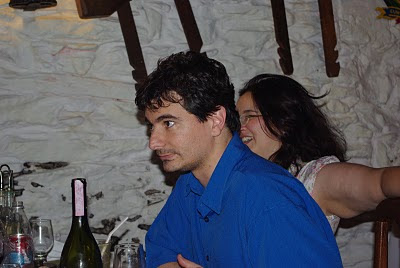
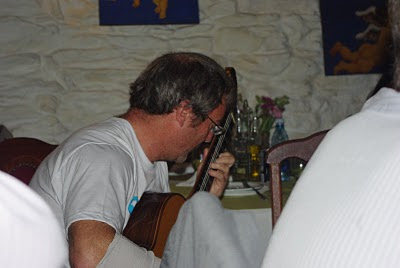
These two photos are a couple of my favorites. I wonder if Barry is suggesting to John that the adiabatic stereoelectrostatic compressibility of the polarisability tensor may well be the the elusive Universal Efficiency Metric that he is searching for. Of course they could just be swapping fishing stories. One of the highlights of the dinner was Mike playing classical guitar and I was pleased that caipirinha consumption did not interfere with ability to operate a rather bulky digital SLR.

Literature cited
Guimarães & Cardozo, MM-GB/SA Rescoring of Docking Poses in Structure-Based Lead Optimization. J. Chem. Inf. Model. 2008, 48, 958-970 DOI
Ladbury, Klebe & Freire Adding calorimetric data to decision making in lead discovery: a hot tip. Nat. Rev. Drug Discov. 2010, 9, 23-27 DOI


Although the work of Carlos Chagas is worthy of celebration the current state of treatment of Chagas Disease is most definitely not. Like the better known African Sleeping Sickness, it is a trypanosomal disease and of minimal interest to Big Pharma. The drugs used for treatment have unpleasant side effects and once the disease enters the chronic phase they become a lot less effective. A number of lectures focus on the nature of the disease and I find these particularly interesting, although occasionally gruesome (I always appreciate these reminders of why I never considered pathology as a profession).
Álvaro Romanha delivers an interesting keynote lecture in which he looks back over a long career in parasitology. He describes characterisation of the effects of a number of compounds (including one developed by my former employer) on the Chagas parasite. Lucio Freitas-Junior and Andrei Leitão both talk about cell-based assays which can be used in target identification as well as lead discovery. I hope the folk doing natural product research are taking notes...
Barry Sharpless delivers an entertaining lecture on Click Chemistry and I also enjoy talks by Mike Gelb and Tom von Geldern since these both have a strong medicinal chemistry focus. The work described by Mike used Tipifarnib (1), a farnesyl transferase inhibitor as a starting point. This compound kills T. cruzi and its good pharmacokinetic properties reflect the fact that it had been in clinical development. It turns out that the compound actually inhibits the trypanosomal lanosterol 14-demethylase and this is the reason that it is able to kill the parasite. The optimized compound (2) shows efficacy against acute Chagas in mice and is sufficiently selective not to inhibit human lanosterol 14-demethylase or farnesyl transferase. The focus of Tom’s lecture is African Sleeping Sickness although this is still highly relevant to Chagas Disease. He describes an interesting series of cyclic boronate esters (3), the mode of action of which is still uncertain. If you’re going after Sleeping Sickness you’re going to have to get your drug through the blood brain barrier. Tom describes some of the approaches that the team adopted to optimize pharmacokinetics and achieving good Central Nervous System (CNS) penetration. In the chronic phase of Chagas Disease the parasites take refuge in the cells of their host so the drug has an additional barrier to cross. I wonder how the presence of an intracellular parasite might stimulate expression of efflux transporters in a host cell? That would indeed be sneaky...

Cristiano Guimarães presents analysis of relationships between permeability and physicochemical properties such as polarity and molecular size. However, I am more interested in what he has to say about re-scoring of docking poses. In particular, he notes that conformational entropy lost on binding tends to get over-estimated and has published some of this work. Enthalpy is the focus of the lecture by John Ladbury who describes how calorimetry can be used as a tool for understanding biomolecular interactions and an aid to drug design. The idea is that enthalpy changes associated with binding reflect the extent to which polar interactions form between the molecules in the complex. If you can exploit polar interactions to increase affinity then hopefully you’ll end up in a better place because polarity tends to be associated with better aqueous solubility, selectivity and metabolic stability. However, interpretation of the enthalpy and entropy changes associated with binding remains a challenging problem. I'd suggest taking a look at John's recent publication and recent discussion in the LinkedIn Medicinal Chemisry and Drug Discovery Group if you want to find out more.
That just about wraps up the technical part of this post and there is a page for links to talks. However, I did manage to get a few pictures including one of Carlos and another of his boss at the opening reception.


The following photos were taken at afternoon coffee on the last day of the conference. The first of these shows three of my friends from Rio and it was Daniel who did an excellent job introducing and chairing the molecular design session in which I spoke.
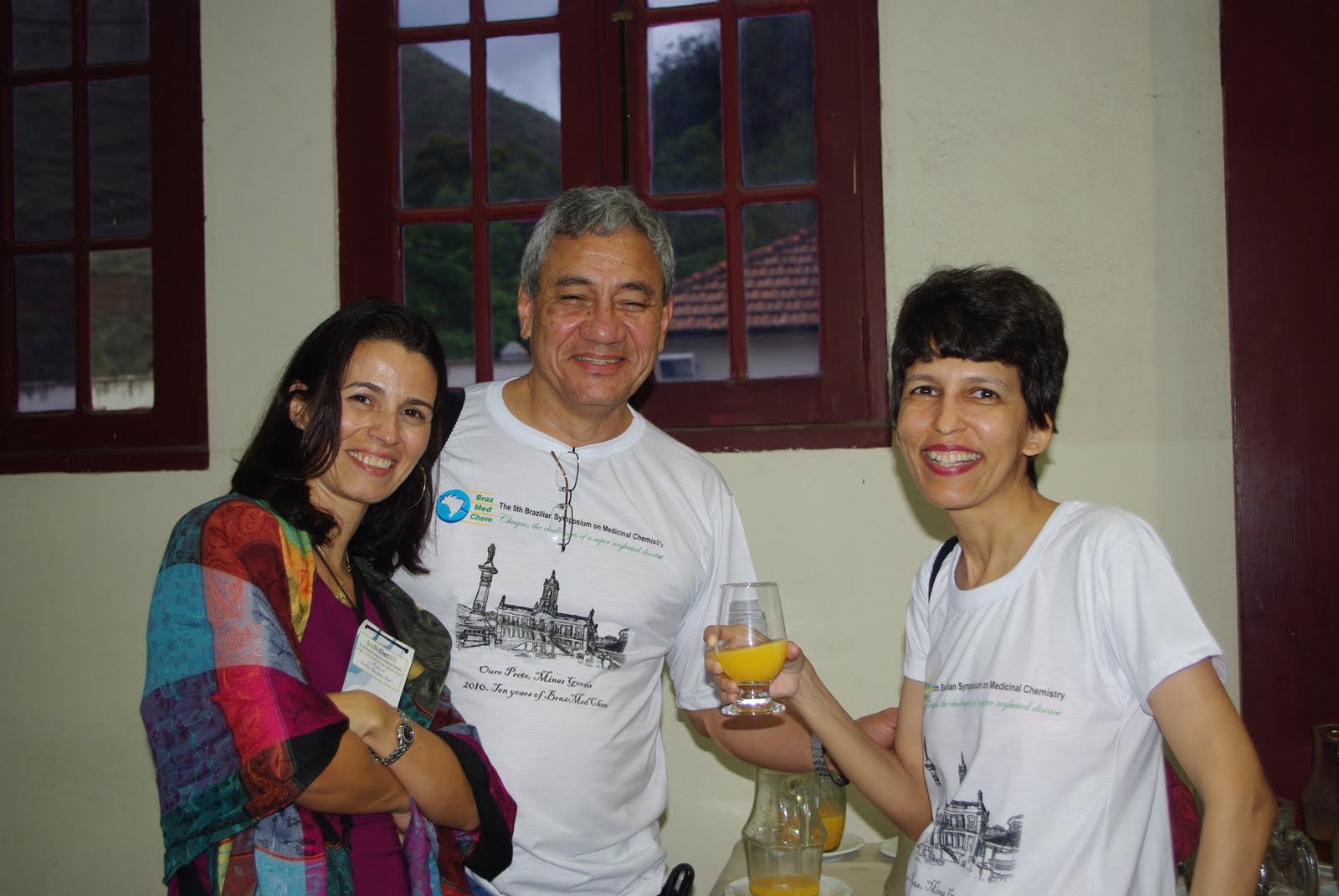


These pictures were taken towards the end of the conference. The paparazzo certainly knows how make the ladies from Porto smile and Carlos does look happy to be passing the baton to Vera who will be organising BrazMedChem2012.


Then it was time for dinner. Tom, Roberto and Ivan were staying in the annex and had to be be summoned. Tom looks a bit hungrier than the other two.

These folk are from FIOCRUZ in Belo Horizonte apart from Claudia (Federal University of Ouro Preto) and Malu who can't resist the photo opportunity. Andrei is looking quite intense in the next photo, Patricia less so.


These two photos are a couple of my favorites. I wonder if Barry is suggesting to John that the adiabatic stereoelectrostatic compressibility of the polarisability tensor may well be the the elusive Universal Efficiency Metric that he is searching for. Of course they could just be swapping fishing stories. One of the highlights of the dinner was Mike playing classical guitar and I was pleased that caipirinha consumption did not interfere with ability to operate a rather bulky digital SLR.


Literature cited
Guimarães & Cardozo, MM-GB/SA Rescoring of Docking Poses in Structure-Based Lead Optimization. J. Chem. Inf. Model. 2008, 48, 958-970 DOI
Ladbury, Klebe & Freire Adding calorimetric data to decision making in lead discovery: a hot tip. Nat. Rev. Drug Discov. 2010, 9, 23-27 DOI
Friday, 29 October 2010
EuroQSAR 2010
I thought this would be a good photo to start the post on EuroQSAR 2010. It really was great fun to be in Rhodes and to catch up with a lot of folk whom I've not seen for a while. The photo was taken at Delphi the day after the conference ended. This the Temple of Apollo where the priestess in residence would inhale hot gases and make predictions... of course nothing like QSAR!

You may well ask what a conference on QSAR has to do with FBDD so I'll try to make the connection clearer. The central problem in QSAR is prediction of affinity so it's a good idea to maintain awareness of the field if you're planning to exploit protein or ligand structures in selection of fragments for screening. Also if you're planning to analyse and design compound libraries or assess druggability then it's useful to know a bit about the molecular descriptors and data analytic methods that form the basis of modern QSAR.
The ultimate goal in QSAR is to start with a molecular structure and predict the physiological effects of the compound. In order to to this you need to be able to predict the extent to which the drug binds to its primary target and a number of anti-targets. You can calculate the extent of binding from the affinity of the drug and its unbound (e.g. to plasma protein) concentration in the vicinity of the target. With typical dosing the unbound drug concentration is a function of both time and location (e.g. intracellular versus extracellular) within the body. If that sounds unbearably complex then I should warn you that it can get a whole lot worse because binding might be slow and you might also need to worry about things like reactive metabolites, isoforms and how toasted the patient got in the pub the night before.
I believe that we're a very long way off seeing this goal achieved. Even when the structure of a protein is known, prediction of affinity for an arbitrary ligand is just not accurate enough. Prediction of unbound concentration at arbitrary location in the body is equally difficult although for some targets it may be sufficient to know the unbound plasma concentration. Nevertheless it is possible to build useful models for some of the pieces in this jigsaw (e.g. binding to plasma protein; IC50 for series of chemically similar receptor antagonists) especially when the process in question is strongly influenced by lipophilicity. QSAR models can be local (i.e. only applicable within a restricted regions of chemical space such as a series of analogs) or global (applicable to any arbitrary molecule). My view is that QSAR models presented as global are frequently ensembles of local models and I have expressed this opinion in print.
I guess that something should be said about the talks after such a long-winded introduction. Some of the speakers have made their lecture slides available. I should first point out that I managed to miss the only talk specifically on FBDD because I was retrieving my camera from my hotel room so that I could photograph a friend doing her poster presentation. The inaugural lecture is given by Hugo Kubinyi and although I saw 'The long road from QSAR to virtual screening' two and a half years ago at an OpenEye meeting in Strasbourg, it is still amusing to see polar surface area and connectivity descriptors cop some flak.
Anthony Nicholls delivers a stimulating lecture entitled 'Information Theory & QSAR'. Nearest neighbor models crop up in more than once in this talk and I liked the suggestion that in validation we should be 'making tests NN resistant'. Nearest neighbours also make an appearance in Han van de Waterbeemd's talk (Assessing Drug Safety and Efficacy through ADME predictions) in the context of 'correction libraries'. The idea behind a correction library is to see if there are systematic errors in the predicted values of a property for near neighbours of the compound for which you're making a prediction. If so the differences between the values measured for the neighbor and predicted for them by the model can be used to correct predictions for new compounds. Of course Orwell would have said that all QSAR models are global...
I enjoyed (not least because he did not appear over-awed by the illustrious inaugural lecturer) the lecture by Alex Tropsha entitled 'Novel Approaches to Chemical Toxicity Prediction Relying on the Entire Structure- in vitro in vivo Data Continuum'. Attempting to sum up the talk in one sentence, I'd say that this was a view of how QSAR modelling might be used to integrate diverse data types that vary in complexity and noise level. One comment that I captured from the 'Notes on chemical descriptors' slide (#14; it's marked 'de-Ku' at bottom left) was that 'descriptors are designed to reflect uniqueness of a molecule in comparison with other molecules'. What does this say about nearest neighbours, I wonder...
Jordi Mestres makes the point in his talk, entitled 'Ligand-based Approaches to In-Silico Pharmacology', that we should STOP using the word 'polypharmacology'. I couldn't agree more although I think the term 'pharmacodynamics' is a couple of orders of magnitude more meaningless. This lecture is about predicting affinity across a range of GPCRs and how these affinity profiles might be used, for example, to anticipate side effects of drugs. Intracellular targets will add complexity because less will be known about unbound concentration of drug in the vicinity of the target.
There's also a session on design of agrochemicals kicked off by Klaus-Juergen Schleifer. All molecular design is subject to constraints and it is always educational to see how people designing molecules for different purposes deal with the constraints that apply to them. Designers of agrochemicals need to deal with different species of plants, fungi and insects in a chemical-unfriendly (e.g. bright sunlight, rain) environment. Pharmaceutical QSAR modellers may find that they learn more in an agrochemical session than a pharmaceutical one.
I must confess to being less than alert on the Friday morning and this may have something to do with over-indulging at the conference dinner and ending up on the beach at 2AM (it seemed a good idea at the time but then it always does). Eric Martin describes how QSAR methodology can be used to integrate affinity and protein structural data for protein kinase inhibitors. Tudor Oprea's lecture (Computer-Aided Drug Re-purposing) is notable because of the use of experimental pharmacokinetic data (this is typically available for marketed drugs) to get a handle on unbound plasma concentration. Aspiring systems biologists, take note.
I've taken a look at some of the talks and it's a good time to summarise before getting on to the fun bit where I share some pictures. Firstly I do not see prediction of affinity for arbitrary molecules (e.g. when there is no measured data for analogs) something we can currently do in a useful and general manner. Secondly, I don't see model validation as a solved problem and a session on the subject is something that the Scientific Committee may wish to think about for EuroQSAR2012 in Vienna. Thirdly remember that, "A theory has only the alternative of being right or wrong. A model has a third possibility: it may be right, but irrelevant" (Manfred Eigen).
The excursion to Lindos provides an excellent opportunity get some pictures. First to be papped is fellow AZ-escapee Han.

I sneak up on Anna (who also doesn't work at AZ any more) as we wait for the bus.

Dick is the man behind CoMFA and Topomers and I've lost count of the number of conferences which we have both attended.

Unfortunately I can't get Yvonne to look at the camera. To her right is Cynthia who co-chaired the session on descriptors in which Yvonne and I both did talks. Andreas and Ylva are smiling because I've told them that the chef has got rotted herring on the menu for the conference dinner.

I finally catch Yvonne as we're waiting for the bus back. I'd not seen Eric since the mid-90s so it's good to get the two of them together in this photo.

David (make sure you're in a country with an almost worthless unit of currency should you presume in his presence otherwise prepare to pay out big time) and Frank have been in this business a long time.

Portraits from the conference dinner.

David is animated but Ant looks in need of a dose of the Poisson-Boltzmanns.

Dimitris appears strangely unconcerned to be in the company of two Transylvanians who are discussing anticoagulant QSVRs (Quantitative Structure Viscosity Relationships) as they admire the tone of his carotid arteries.

Graduate students. Birte (4th from left) did a talk and both Juliana (2nd from left) and Andrea (3rd from left) had their posters selected for oral presentation.

Party animals.


You may well ask what a conference on QSAR has to do with FBDD so I'll try to make the connection clearer. The central problem in QSAR is prediction of affinity so it's a good idea to maintain awareness of the field if you're planning to exploit protein or ligand structures in selection of fragments for screening. Also if you're planning to analyse and design compound libraries or assess druggability then it's useful to know a bit about the molecular descriptors and data analytic methods that form the basis of modern QSAR.
The ultimate goal in QSAR is to start with a molecular structure and predict the physiological effects of the compound. In order to to this you need to be able to predict the extent to which the drug binds to its primary target and a number of anti-targets. You can calculate the extent of binding from the affinity of the drug and its unbound (e.g. to plasma protein) concentration in the vicinity of the target. With typical dosing the unbound drug concentration is a function of both time and location (e.g. intracellular versus extracellular) within the body. If that sounds unbearably complex then I should warn you that it can get a whole lot worse because binding might be slow and you might also need to worry about things like reactive metabolites, isoforms and how toasted the patient got in the pub the night before.
I believe that we're a very long way off seeing this goal achieved. Even when the structure of a protein is known, prediction of affinity for an arbitrary ligand is just not accurate enough. Prediction of unbound concentration at arbitrary location in the body is equally difficult although for some targets it may be sufficient to know the unbound plasma concentration. Nevertheless it is possible to build useful models for some of the pieces in this jigsaw (e.g. binding to plasma protein; IC50 for series of chemically similar receptor antagonists) especially when the process in question is strongly influenced by lipophilicity. QSAR models can be local (i.e. only applicable within a restricted regions of chemical space such as a series of analogs) or global (applicable to any arbitrary molecule). My view is that QSAR models presented as global are frequently ensembles of local models and I have expressed this opinion in print.
I guess that something should be said about the talks after such a long-winded introduction. Some of the speakers have made their lecture slides available. I should first point out that I managed to miss the only talk specifically on FBDD because I was retrieving my camera from my hotel room so that I could photograph a friend doing her poster presentation. The inaugural lecture is given by Hugo Kubinyi and although I saw 'The long road from QSAR to virtual screening' two and a half years ago at an OpenEye meeting in Strasbourg, it is still amusing to see polar surface area and connectivity descriptors cop some flak.
Anthony Nicholls delivers a stimulating lecture entitled 'Information Theory & QSAR'. Nearest neighbor models crop up in more than once in this talk and I liked the suggestion that in validation we should be 'making tests NN resistant'. Nearest neighbours also make an appearance in Han van de Waterbeemd's talk (Assessing Drug Safety and Efficacy through ADME predictions) in the context of 'correction libraries'. The idea behind a correction library is to see if there are systematic errors in the predicted values of a property for near neighbours of the compound for which you're making a prediction. If so the differences between the values measured for the neighbor and predicted for them by the model can be used to correct predictions for new compounds. Of course Orwell would have said that all QSAR models are global...
I enjoyed (not least because he did not appear over-awed by the illustrious inaugural lecturer) the lecture by Alex Tropsha entitled 'Novel Approaches to Chemical Toxicity Prediction Relying on the Entire Structure- in vitro in vivo Data Continuum'. Attempting to sum up the talk in one sentence, I'd say that this was a view of how QSAR modelling might be used to integrate diverse data types that vary in complexity and noise level. One comment that I captured from the 'Notes on chemical descriptors' slide (#14; it's marked 'de-Ku' at bottom left) was that 'descriptors are designed to reflect uniqueness of a molecule in comparison with other molecules'. What does this say about nearest neighbours, I wonder...
Jordi Mestres makes the point in his talk, entitled 'Ligand-based Approaches to In-Silico Pharmacology', that we should STOP using the word 'polypharmacology'. I couldn't agree more although I think the term 'pharmacodynamics' is a couple of orders of magnitude more meaningless. This lecture is about predicting affinity across a range of GPCRs and how these affinity profiles might be used, for example, to anticipate side effects of drugs. Intracellular targets will add complexity because less will be known about unbound concentration of drug in the vicinity of the target.
There's also a session on design of agrochemicals kicked off by Klaus-Juergen Schleifer. All molecular design is subject to constraints and it is always educational to see how people designing molecules for different purposes deal with the constraints that apply to them. Designers of agrochemicals need to deal with different species of plants, fungi and insects in a chemical-unfriendly (e.g. bright sunlight, rain) environment. Pharmaceutical QSAR modellers may find that they learn more in an agrochemical session than a pharmaceutical one.
I must confess to being less than alert on the Friday morning and this may have something to do with over-indulging at the conference dinner and ending up on the beach at 2AM (it seemed a good idea at the time but then it always does). Eric Martin describes how QSAR methodology can be used to integrate affinity and protein structural data for protein kinase inhibitors. Tudor Oprea's lecture (Computer-Aided Drug Re-purposing) is notable because of the use of experimental pharmacokinetic data (this is typically available for marketed drugs) to get a handle on unbound plasma concentration. Aspiring systems biologists, take note.
I've taken a look at some of the talks and it's a good time to summarise before getting on to the fun bit where I share some pictures. Firstly I do not see prediction of affinity for arbitrary molecules (e.g. when there is no measured data for analogs) something we can currently do in a useful and general manner. Secondly, I don't see model validation as a solved problem and a session on the subject is something that the Scientific Committee may wish to think about for EuroQSAR2012 in Vienna. Thirdly remember that, "A theory has only the alternative of being right or wrong. A model has a third possibility: it may be right, but irrelevant" (Manfred Eigen).
The excursion to Lindos provides an excellent opportunity get some pictures. First to be papped is fellow AZ-escapee Han.

I sneak up on Anna (who also doesn't work at AZ any more) as we wait for the bus.

Dick is the man behind CoMFA and Topomers and I've lost count of the number of conferences which we have both attended.

Unfortunately I can't get Yvonne to look at the camera. To her right is Cynthia who co-chaired the session on descriptors in which Yvonne and I both did talks. Andreas and Ylva are smiling because I've told them that the chef has got rotted herring on the menu for the conference dinner.

I finally catch Yvonne as we're waiting for the bus back. I'd not seen Eric since the mid-90s so it's good to get the two of them together in this photo.

David (make sure you're in a country with an almost worthless unit of currency should you presume in his presence otherwise prepare to pay out big time) and Frank have been in this business a long time.

Portraits from the conference dinner.

David is animated but Ant looks in need of a dose of the Poisson-Boltzmanns.

Dimitris appears strangely unconcerned to be in the company of two Transylvanians who are discussing anticoagulant QSVRs (Quantitative Structure Viscosity Relationships) as they admire the tone of his carotid arteries.

Graduate students. Birte (4th from left) did a talk and both Juliana (2nd from left) and Andrea (3rd from left) had their posters selected for oral presentation.

Party animals.

Friday, 1 October 2010
Molecular Interactions
Molecular interactions are an important part of the theoretical framework of modern drug discovery and studying them is a great way to increase your understanding of physicochemical principles of molecular design. One view of molecular design is as a process of tuning the interactions of molecules with the different environments in which they exist. Needless to say, knowledge of molecular interactions is particularly valuable in FBDD. Three Roche scientists have recently published “A Molecular Chemist’s Guide to Molecular Interactions” which should be of interest to anyone working in molecular design and other bloggers ( Derek | Joerg ) have already highlighted the article.
The authors cover plenty of ground and everybody should find their favourite molecular interactions discussed. Given the recent LinkedIn discussion on the value of measuring enthalpy and entropy changes associated with binding, I was pleased to see that the authors noted that interpretation of these quantities is typically difficult. The discussion of cooperativity was useful because we often assume that contributions of interactions to binding are additive.
One of my favorite interactions is halogen bonding and I am pleased to see it discussed in some detail. The halogens all confer a degree of hydrophobicity on a molecule and the heavier halogens (i.e. not fluorine) also exhibit an ability to interact with hydrogen bond acceptors that increases with atomic number. Although this class of interaction is sometimes thought to have been discovered in recent times, it’s actually been around a long time. I can remember learning, as a schoolboy in Port of Spain in the mid-1970s, about why iodine is more soluble in aqueous potassium iodide than in water. I developed this theme a bit more in a light-hearted survey of halogens at EuroCUP in 2008 which starred both Bismarck and a medical writer by the name of Bouchardat who was active in Paris when Pincess Victoria became Queen Victoria. I'm not sure if they ever caught the notorious Parisian dog-poisoner.
Something that I found disappointing was that there was not a lot of information about how much additional affinity you’re likely to get by making the different interactions. This should not be seen as a criticism of the authors who have carried out an impressive trawl of the literature. It’s just disappointing that the information is not available in the current literature base.
I’ve some comments to make on the discussion of hydrogen bonds. There is a widely accepted view that the maximum contribution to affinity that a hydrogen bond between a neutral donor and acceptor can make is just over a log unit and here’s what the Roche authors had to say on the subject:
“Hydrogen bonds always convey specificity to a recognition process but do not always add much binding free energy. Desolvation of the donor and the acceptor must occur for the hydrogen bond to form, such that the effects of hydration and hydrogen bond formation nearly cancel out”
I certainly agree that in some cases the contribution of hydrogen bonds to affinity will be minimal. However, the dataset from which that figure of just over a log unit was derived is actually quite small and not especially diverse in terms of donor-acceptor pairings. I believe that if you can form the hydrogen bond deep in a binding pocket then it can make more than the widely accepted maximum contribution to affinity. We recently published inhibition data which included the example of aza-substitution of a pyridine ring resulting in increases of potency of about two log units against Cathepsins S and L2. Some caution is required in interpreting these results because we didn’t have the relevant crystal structures and the inhibitors are racemic. However, I do believe that these results should make us question the prevailing view of the maximum contribution that a hydrogen bond between a neutral donor and acceptor can make to affinity.
I’ll say some things about the discussion of the hydrogen bonding of sulfonyl groups because it should get you thinking a bit. The authors state that:
“Only 30% of the sulfones and sulfonamides form hydrogen bonds. This raises the question of which type of interaction this functional group prefers.”
I’m not sure that I agree with the second sentence and would be interested to know how many of these sulfones and sulphonamides actually had the opportunity to accept a hydrogen bond. If no hydrogen bond donors are present in a molecule then you can’t really blame the sulfonyl oxygens for making contact with aliphatic carbon in the solid state since that's going to be a better option than getting in the way of the sulfonyl oxygens of a lattice neighbour. Even when a donor is present in the molecule, the favoured interaction may well be with a stronger acceptor than the sulfonyl oxygens.
The authors also took a look at the environments of sulfonyl groups in the PDB and here’s what they had to say.
“Notably, of the sulfonyl groups situated in a hydrophobic environment in the PDB, only 36% are found to interact simultaneously as a hydrogen bond acceptor but 79% of the hydrogen-bonded sulfonyl groups are found to interact simultaneously with a hydrophobic group. These findings clearly indicate a dual character of the weakly polar sulfonyl groups as a hydrogen bond acceptor and as a hydrophobic group.”
I simply don’t buy this idea of sulfonyl oxygens having a dual acceptor-hydrophobic character. Hydrophobicity is a statement of aquous solvation characteristics. It will be easier to place a weak acceptor in a hydrophobic environment than it will to place a strong acceptor there. However, if it’s an acceptor, it’ll still prefer the aqueous environment. Think about the consequences of one of these oxygens accepting a hydrogen bond. When an oxygen atom is hydrogen bonded its ability to accept a second hydrogen bond is likely to be reduced because the donor polarises the acceptor oxygen. Also the second donor will also experience repulsive secondary electrostatic interactions with the existing donor. Provided that the oxygen can still accept a hydrogen bond, it will not be too ‘distressed’ (apologies for anthropomorphising) to be in contact with hydrophobic surface. If you’re interested in this sort of thing then take a look at our article on alkane/water partition coefficients to see how accepting a hydrogen bond (from methanol which we used to model octanol) is likely to affect the ability of carbonyl oxygen to accept a second hydrogen bond.
To be fair, the authors do recognise that accepting a hydrogen bond might affect the probability of a sulfonyl oxygen atom making contact with hydrophobic surface. However, this hydrogen bond donor doesn’t need to come from the protein or a water molecule that the crystallographers can see. How many of the sulfonyl oxygen atoms which lack ‘visible’ hydrogen bonds are sufficiently solvent-exposed to accept hydrogen bonds from ‘invisible’ solvent water molecules? I’ll leave it to you the reader to think about whether analysis of the CSD (as opposed the PDB) has any relevance to hydrophobic interactions.
I’m now going to wrap up with what will be seen by some to be nitpicking although that is not my intention. This is what the authors have to say about QM calculations and hydrogen bonding:
“Where experimental data are not available, acceptor strengths can be obtained from quantum chemical calculations.”
My first criticism of this statement (which is getting very close to nitpicking although as The Blogger I’m allowed to do that) is that quantum chemical calculations can be used to predict donor strengths as well. Like they might say in Buenos Aires, it takes two to tango. My second criticism is that rather than talking about generic “quantum chemical calculations” the authors could also have mentioned that electrostatic potential is a useful predictor of both acceptor and donor strength. I have to declare an interest here as author of reference 98d but I do believe that the effectiveness of electrostatic potential as a predictor of donor and acceptor strength is more important than whether it was calculated quantum mechanically or classically. It tells us something about the nature of the hydrogen bond.
That brings us to the end of my review. The article is definitely a good read and a valuable contribution to the field. To put it bluntly, you need to know this stuff if you want to succeed in FBDD. I’ve flagged up the issue of sulfonyl oxygen hydrogen bonding to hopefully make you think a bit and maybe even generate some discussion. Feel free to make comments of your own.
Literature cited
Bissantz, Kuhn & Stahl, A Medicinal Chemist’s Guide to Molecular Interactions. J. Med. Chem. 2010, 53, 5061-5084 DOI
Davis & Teague, Hydrogen Bonding, Hydrophobic Interactions, and Failure of the Rigid Receptor Hypothesis Angew. Chem. 1999, 38 736-749 DOI
Bethel et al, Design of selective Cathepsin inhibitors. Bioorg. Med. Chem. Lett. 2009, 19, 4622-4625 DOI
Toulmin, Wood & Kenny, Toward Prediction of Alkane/Water Partition Coefficients. J. Med. Chem. 2008 51, 3720-3730 DOI
Kenny, Hydrogen bonding, electrostatic potential and molecular design. J. Chem. Inf. Model. 2009, 49, 1234-1244 DOI
The authors cover plenty of ground and everybody should find their favourite molecular interactions discussed. Given the recent LinkedIn discussion on the value of measuring enthalpy and entropy changes associated with binding, I was pleased to see that the authors noted that interpretation of these quantities is typically difficult. The discussion of cooperativity was useful because we often assume that contributions of interactions to binding are additive.
One of my favorite interactions is halogen bonding and I am pleased to see it discussed in some detail. The halogens all confer a degree of hydrophobicity on a molecule and the heavier halogens (i.e. not fluorine) also exhibit an ability to interact with hydrogen bond acceptors that increases with atomic number. Although this class of interaction is sometimes thought to have been discovered in recent times, it’s actually been around a long time. I can remember learning, as a schoolboy in Port of Spain in the mid-1970s, about why iodine is more soluble in aqueous potassium iodide than in water. I developed this theme a bit more in a light-hearted survey of halogens at EuroCUP in 2008 which starred both Bismarck and a medical writer by the name of Bouchardat who was active in Paris when Pincess Victoria became Queen Victoria. I'm not sure if they ever caught the notorious Parisian dog-poisoner.
Something that I found disappointing was that there was not a lot of information about how much additional affinity you’re likely to get by making the different interactions. This should not be seen as a criticism of the authors who have carried out an impressive trawl of the literature. It’s just disappointing that the information is not available in the current literature base.
I’ve some comments to make on the discussion of hydrogen bonds. There is a widely accepted view that the maximum contribution to affinity that a hydrogen bond between a neutral donor and acceptor can make is just over a log unit and here’s what the Roche authors had to say on the subject:
“Hydrogen bonds always convey specificity to a recognition process but do not always add much binding free energy. Desolvation of the donor and the acceptor must occur for the hydrogen bond to form, such that the effects of hydration and hydrogen bond formation nearly cancel out”
I certainly agree that in some cases the contribution of hydrogen bonds to affinity will be minimal. However, the dataset from which that figure of just over a log unit was derived is actually quite small and not especially diverse in terms of donor-acceptor pairings. I believe that if you can form the hydrogen bond deep in a binding pocket then it can make more than the widely accepted maximum contribution to affinity. We recently published inhibition data which included the example of aza-substitution of a pyridine ring resulting in increases of potency of about two log units against Cathepsins S and L2. Some caution is required in interpreting these results because we didn’t have the relevant crystal structures and the inhibitors are racemic. However, I do believe that these results should make us question the prevailing view of the maximum contribution that a hydrogen bond between a neutral donor and acceptor can make to affinity.
I’ll say some things about the discussion of the hydrogen bonding of sulfonyl groups because it should get you thinking a bit. The authors state that:
“Only 30% of the sulfones and sulfonamides form hydrogen bonds. This raises the question of which type of interaction this functional group prefers.”
I’m not sure that I agree with the second sentence and would be interested to know how many of these sulfones and sulphonamides actually had the opportunity to accept a hydrogen bond. If no hydrogen bond donors are present in a molecule then you can’t really blame the sulfonyl oxygens for making contact with aliphatic carbon in the solid state since that's going to be a better option than getting in the way of the sulfonyl oxygens of a lattice neighbour. Even when a donor is present in the molecule, the favoured interaction may well be with a stronger acceptor than the sulfonyl oxygens.
The authors also took a look at the environments of sulfonyl groups in the PDB and here’s what they had to say.
“Notably, of the sulfonyl groups situated in a hydrophobic environment in the PDB, only 36% are found to interact simultaneously as a hydrogen bond acceptor but 79% of the hydrogen-bonded sulfonyl groups are found to interact simultaneously with a hydrophobic group. These findings clearly indicate a dual character of the weakly polar sulfonyl groups as a hydrogen bond acceptor and as a hydrophobic group.”
I simply don’t buy this idea of sulfonyl oxygens having a dual acceptor-hydrophobic character. Hydrophobicity is a statement of aquous solvation characteristics. It will be easier to place a weak acceptor in a hydrophobic environment than it will to place a strong acceptor there. However, if it’s an acceptor, it’ll still prefer the aqueous environment. Think about the consequences of one of these oxygens accepting a hydrogen bond. When an oxygen atom is hydrogen bonded its ability to accept a second hydrogen bond is likely to be reduced because the donor polarises the acceptor oxygen. Also the second donor will also experience repulsive secondary electrostatic interactions with the existing donor. Provided that the oxygen can still accept a hydrogen bond, it will not be too ‘distressed’ (apologies for anthropomorphising) to be in contact with hydrophobic surface. If you’re interested in this sort of thing then take a look at our article on alkane/water partition coefficients to see how accepting a hydrogen bond (from methanol which we used to model octanol) is likely to affect the ability of carbonyl oxygen to accept a second hydrogen bond.
To be fair, the authors do recognise that accepting a hydrogen bond might affect the probability of a sulfonyl oxygen atom making contact with hydrophobic surface. However, this hydrogen bond donor doesn’t need to come from the protein or a water molecule that the crystallographers can see. How many of the sulfonyl oxygen atoms which lack ‘visible’ hydrogen bonds are sufficiently solvent-exposed to accept hydrogen bonds from ‘invisible’ solvent water molecules? I’ll leave it to you the reader to think about whether analysis of the CSD (as opposed the PDB) has any relevance to hydrophobic interactions.
I’m now going to wrap up with what will be seen by some to be nitpicking although that is not my intention. This is what the authors have to say about QM calculations and hydrogen bonding:
“Where experimental data are not available, acceptor strengths can be obtained from quantum chemical calculations.”
My first criticism of this statement (which is getting very close to nitpicking although as The Blogger I’m allowed to do that) is that quantum chemical calculations can be used to predict donor strengths as well. Like they might say in Buenos Aires, it takes two to tango. My second criticism is that rather than talking about generic “quantum chemical calculations” the authors could also have mentioned that electrostatic potential is a useful predictor of both acceptor and donor strength. I have to declare an interest here as author of reference 98d but I do believe that the effectiveness of electrostatic potential as a predictor of donor and acceptor strength is more important than whether it was calculated quantum mechanically or classically. It tells us something about the nature of the hydrogen bond.
That brings us to the end of my review. The article is definitely a good read and a valuable contribution to the field. To put it bluntly, you need to know this stuff if you want to succeed in FBDD. I’ve flagged up the issue of sulfonyl oxygen hydrogen bonding to hopefully make you think a bit and maybe even generate some discussion. Feel free to make comments of your own.
Literature cited
Bissantz, Kuhn & Stahl, A Medicinal Chemist’s Guide to Molecular Interactions. J. Med. Chem. 2010, 53, 5061-5084 DOI
Davis & Teague, Hydrogen Bonding, Hydrophobic Interactions, and Failure of the Rigid Receptor Hypothesis Angew. Chem. 1999, 38 736-749 DOI
Bethel et al, Design of selective Cathepsin inhibitors. Bioorg. Med. Chem. Lett. 2009, 19, 4622-4625 DOI
Toulmin, Wood & Kenny, Toward Prediction of Alkane/Water Partition Coefficients. J. Med. Chem. 2008 51, 3720-3730 DOI
Kenny, Hydrogen bonding, electrostatic potential and molecular design. J. Chem. Inf. Model. 2009, 49, 1234-1244 DOI
Subscribe to:
Posts (Atom)